Why Leaves Turn Red

Daniel
18-11-2026
 · Plant Team
Welcome, everyone. Every fall the same thing happens in your neighborhood: the green starts draining out of the trees, and within a couple of weeks the whole street is orange and red.
"It looks sudden. It isn't—at least not completely. While yellow and orange pigments sit quietly inside the leaf all summer, brilliant autumn reds are freshly crafted right as the season shifts.

The green is the first to go
Leaves stay green because of chlorophyll, the pigment that captures sunlight for photosynthesis. As days shorten and temperatures drop, trees stop producing it and actively break existing molecules down to reclaim nitrogen and other nutrients for winter storage. Once the green fades, yellow and orange pigments called carotenoids—the same family that colors carrots and corn—finally show through. A sugar maple in full yellow in October hasn't turned anything on. It has simply lost its cover.
Want beautiful blooms at home? Learn simple growing tips for healthy Asiatic lilies and vibrant flowers!
Dreaming of charming rose blooms? Get practical tips for planting, watering, pruning, and everyday care!
Leggy growth isn't random. Light, water, and season all push your plant to reach.
Trees at the back, shrubs in the middle, flowers up front. Here's how the three tiers actually fit together.
Why maple leaves turn red, how sap becomes syrup, and what those winged seeds actually do.
A calm, crisp pairing that works in beds, borders, and cut arrangements all season
Red is a different story
Red and purple leaves follow a completely different process. Those shades come from anthocyanins, which trees manufacture fresh in autumn rather than simply uncovering. You can spot the difference in timing: on a red maple, crimson appears late, after yellow has already peaked. Bright autumn sunshine keeps photosynthesis producing sugars during the day, while cool nights seal off the leaf veins so those sugars stay trapped inside—giving the leaf the exact raw fuel it needs to build red pigment. A wet, cloudy autumn gives you muted reds in the same stand of trees.
Why a tree would spend energy on red
The honest answer is that no single explanation has won. One long-standing idea is natural sunscreen: anthocyanins shield the leaf's fragile machinery from bright autumn sunlight while the tree salvages remaining nutrients back into its branches. Another hypothesis suggests bright red acts as a warning signal to migrating aphids and other insects, discouraging them from laying eggs on vigorous trees with strong chemical defenses, though evidence for that view remains mixed. What you can count on is the order of operations. Chlorophyll goes first. Carotenoids show through next. Anthocyanins arrive last, and only in some species, which is why oaks and birches go yellow and bronze while maples go scarlet.
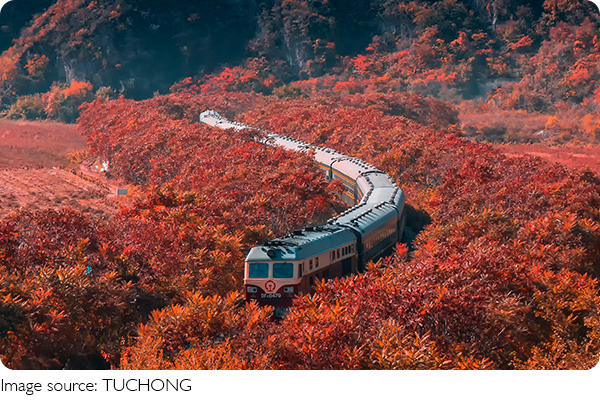
Weather writes the season
Three things drive how dramatic a given fall looks. Day length sets the schedule, and it's the one factor trees won't ignore. Temperature and moisture decide the intensity. A stretch of 45 to 50°F (7 to 10°C) nights paired with bright, dry days pushes anthocyanin production into high gear. An early hard freeze can end the whole show in a week, turning leaves brown and dropping them before any red develops. Drought during summer tends to dull the display too, since stressed trees sometimes skip the color and shut down early.
Not every tree plays along
Evergreens keep their needles year-round because those leaves are built to survive freezing weather with thick waxy coatings and natural antifreeze compounds. Meanwhile, some deciduous trees skip bright colors altogether—sweetgum holds onto green late into autumn, while many oaks rely on bitter compounds called tannins that turn their leaves russet brown. Sweetgum can hold green late into the season, and certain oaks shift straight to brown. Walk the same park in October and you'll see the range: a scarlet maple next to a yellow hickory next to a brown oak, all under the same sky.
Reading Autumn in the Trees
The next time a tree in your yard goes red, remember what you're actually watching. Green leaves are working leaves, yellow ones are revealing what was hidden underneath, and red ones are spending extra energy on a bold farewell. Take a walk this week and notice which trees have turned scarlet versus gold—you'll start reading the past month's weather right in the branches above you.