Vientiane in Two Days

Maya
19-11-2026
 · Travel Team
Welcome to today's article. Most Southeast Asian capitals hit you with noise the moment you step outside.
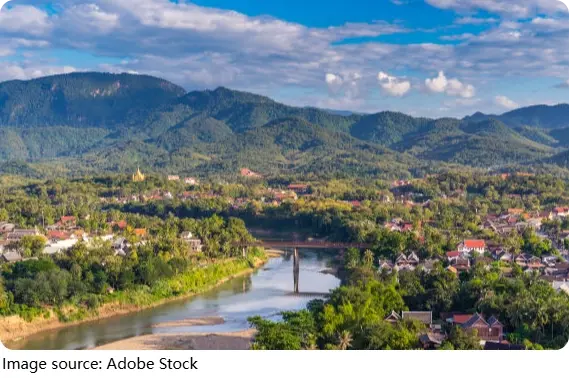
Vientiane does not. Laos's capital feels closer to a large town, with wide boulevards, low buildings, and traffic you can actually cross. That calm is the whole point, and it changes how you should plan a visit here.
Why the slow pace pays off
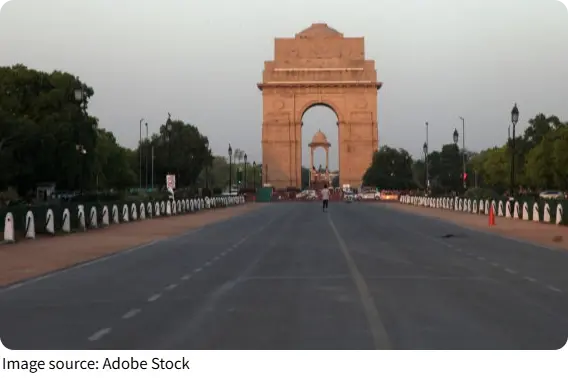
Vientiane sits on a bend of the Mekong River, directly across from Nong Khai in Thailand. You can walk from the riverfront to most central sights in under 30 minutes. That compact layout means you don't need a driver or a tour group. Start at Patuxai, the concrete arch monument on Lane Xang Avenue, often called the local Arc de Triomphe. Climb to the top for about 15,000 kip (roughly $0.70) and you get a clear view over the whole city grid. Then walk 20 minutes south to That Luang, the gold-covered stupa that serves as Laos's national symbol. Two major sights, one morning, no vehicle needed.
A golden stupa, a quiet cloister, and a few smart tips for seeing Laos' national monument without the crowds.
Explore Amsterdam's Historic Mills and Zaanse Schans
How to see Berlin's most famous gate, when to go, and what to budget for a smooth visit.
Plan a visit with advice on transport, quieter times, nearby stops, and photographing the reflections.
The small lake at the center of Hanoi's old quarter, and how to walk it right.
A 132-meter marble obelisk, a gold flame, and the elevator ride that gets you above the smog.
Vientiane
The sights worth your hours
Buddhist temples anchor the city, and Wat Si Saket is the one to prioritize. It holds thousands of small Buddha images set into the walls of its cloister, and it's one of the few temples in Laos that survived the 1828 destruction of Vientiane largely intact. Pair it with COPE Visitor Centre, a small museum on Khou Vieng Road. Entry is free; donations welcome. It's heavy material, but it explains more about modern Laos than any temple will.
Getting in and around
Wattay International Airport sits about 3 km from the center, and a metered taxi or airport shuttle into town runs around 50,000 to 60,000 kip (about $2.50 to $3). Many travelers arrive overland instead, crossing the Thai-Lao Friendship Bridge from Nong Khai. A shuttle bus across the bridge costs around 20 baht, then a songthaew or tuk-tuk into central Vientiane adds another 100 to 150 baht. Once you're in the city, walking handles most of it. For longer hops, a tuk-tuk within the center should cost 30,000 to 50,000 kip, and you should agree on the price before you get in.
Timing your days right
Mornings are cooler and quieter, so put your walking sights before 10 a.m. The riverside promenade along the Mekong comes alive in the late afternoon, when locals set up for exercise and the night market opens near Chao Anouvong Park. That market runs daily and sells textiles, scarves, and street snacks. Budget a couple of hours there. If you're planning around weather, November through February is the dry, cooler stretch, while March to May gets genuinely hot, often pushing past 35°C.
Practical notes before you go
Carry cash. Many small shops and tuk-tuk drivers don't take cards, and ATMs in the center charge a withdrawal fee of around 20,000 kip per transaction, so take out larger amounts less often. Dress for temples means covered shoulders and knees, and you'll be asked to remove shoes at the door. A light scarf in your bag solves the shoulder problem in seconds. Also, the Lao kip is the local currency, but Thai baht is widely accepted in Vientiane, so you don't need to change everything at once.
Two days covers Vientiane comfortably, and that's the honest appeal of the place. You're not racing between attractions here. You're walking a few blocks, sitting by the river, and letting the city move at its own speed. Give it that time and it'll stay with you longer than the bigger, louder capitals do.