Suzhou: Gardens and Canals

Mei
16-11-2026
 · Travel Team
Welcome to today's article. Plenty of travelers treat Suzhou as a day trip from Shanghai, hop off the train, snap a few photos of a garden, and head back by dinner.
That works, but it misses the point. Suzhou rewards a slower pace, and the city is built for it: narrow canals, stone bridges, and gardens designed to be walked through at half speed.
Suzhou
Why Suzhou earns two days
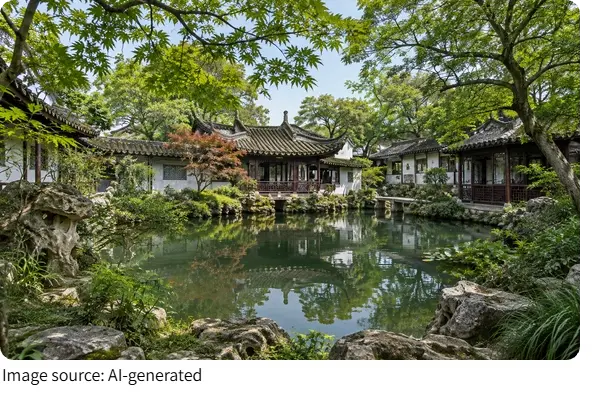
The city sits about 30 minutes from Shanghai on a high-speed train, which makes it tempting to squeeze into an afternoon. Don't. The classical gardens alone take real time, and the best ones are spread across the old town. The Humble Administrator's Garden is the largest and most famous, with a central pond and a series of pavilions you can wander for a couple of hours. The Master of the Nets Garden is smaller and quieter, and many visitors rate it higher for exactly that reason. Two days lets you see both without sprinting.
A coastal city of cliffs, old trams, and sea views, with a practical route and real prices.
Follow quiet canal bends, crooked gables and little bridges on a walk through the Jordaan.
Chongqing's stilt-house cliff is free to walk, best after 7pm, and packed on weekends.
A First-Timer's Guide to Hangzhou's Dragon Well Tea Country
Six Stops Around Mae Hong Son for Hill Tribe Villages, Limestone Caves, and a Horse Ride
What to See at China's Greatest Stone Bridges and How to Plan Your Visit
What to see beyond the gardens
Pingjiang Road runs along a canal through the old town, lined with whitewashed houses and stone bridges, and it's best walked early before the crowds build. Suzhou Museum, designed by I. M. Pei, sits near the Humble Administrator's Garden and is worth an hour for the building alone. If you want a quieter canal stretch, head to Shantang Street in the evening when the lanterns come on. And the Panmen Gate area gives you a section of the old city wall and a pagoda with far fewer people than the main garden circuit.
Getting around and timing it right
Suzhou has a clean metro system, and Line 4 connects the train stations with the old town. For the garden district, a taxi or a short walk between stops works fine. Aim for the gardens right at opening, around 7:30 to 8:00, because tour groups arrive mid-morning and the narrow paths get tight. Tickets to the major gardens typically run 70 to 90 yuan (roughly $10 to $13 USD) depending on the season, and you'll want to book ahead online during weekends and holidays.
Practical planning tips
Stay in the old town near Pingjiang Road if you want to walk to most sights, and expect mid-range hotels around $60 to $100 USD a night. Spring and autumn are the comfortable seasons; summer gets hot and humid, so plan garden visits for the morning. Bring cash or set up a mobile payment app before you arrive, since some smaller shops don't take foreign cards. And wear shoes you can walk in, because the cobblestones along the canals are uneven.
Getting There
Suzhou is about 30 minutes from Shanghai by high-speed train, with one-way tickets costing around 40–60 yuan (roughly US$6–9). The metro (Line 4) connects the train stations with the old town, with fares under 5 yuan (about US$1). For the garden district, a taxi or a short walk between stops works fine. If you're arriving from Shanghai, book your train ticket in advance during weekends and holidays, as seats fill up quickly.
Where to Eat
Suzhou has a good food scene, especially around Pingjiang Road and the old town. A simple vegetarian or chicken meal at a local eatery costs around 30–50 yuan (US$4–7), while a mid-range restaurant serving local specialties like Suzhou-style noodles or freshwater fish runs about 60–100 yuan (US$8–14) per person. For a quick snack, street vendors near the canals sell steamed buns and fruit for roughly 10–20 yuan (US$1.50–3). For self-catering, local supermarkets stock bread, fruit, and supplies for a day out.

Suzhou works best when you stop treating it as a checklist and let the city set the pace. Give it two days, start early, and walk the canals in the evening when the day-trippers have gone. You'll come away with a much better sense of why these gardens have been copied around the world.